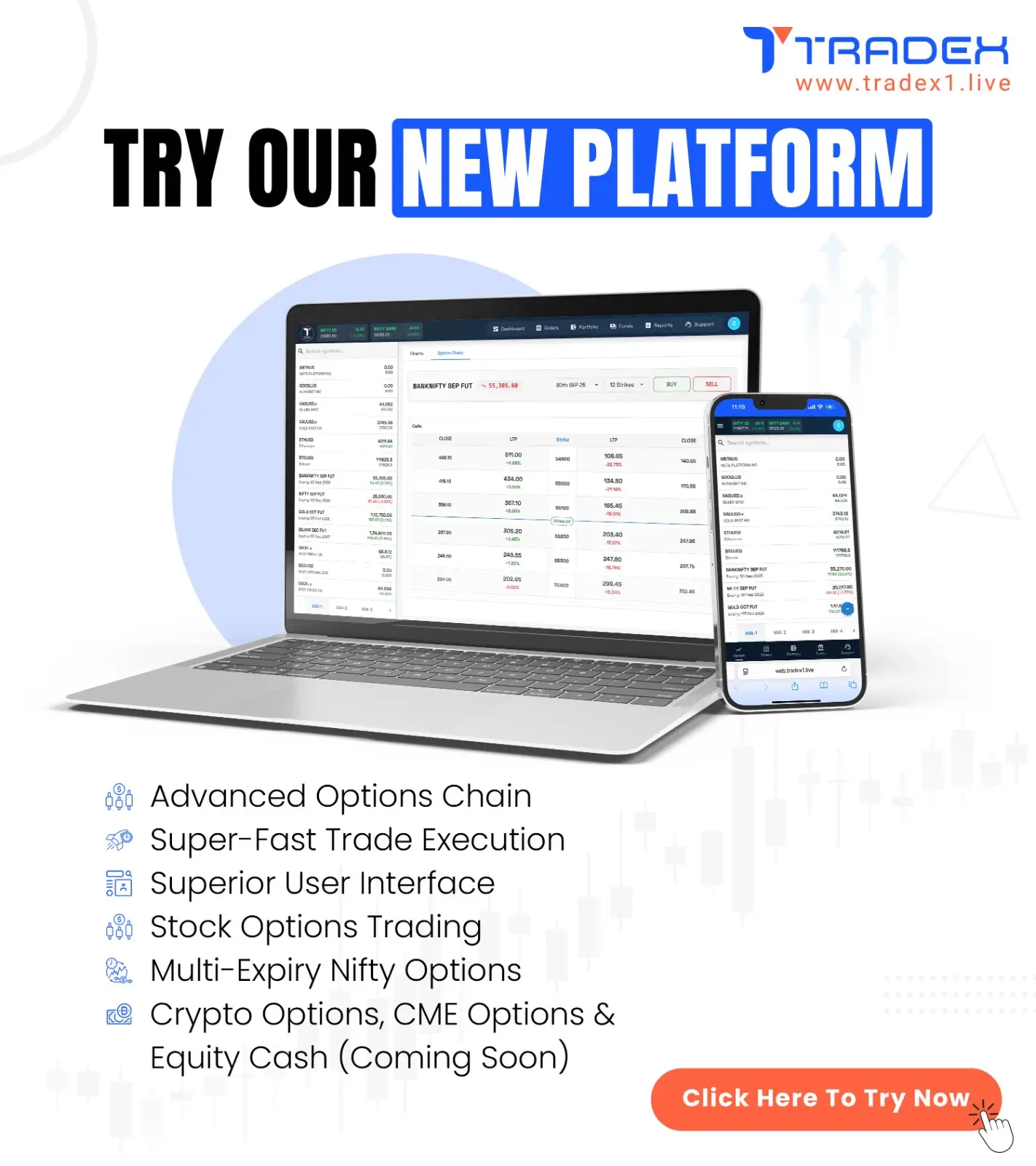
Indian traders who examine trading costs at a structural level often encounter discussions around the best dabba trading app with zero brokerage. Here, we approach that subject from a formal, analytical, and academically grounded standpoint. It does not advocate circumvention, nor does it indulge in promotional excess. Instead, it evaluates how cost management, execution mechanics, and platform design interact within informal trading ecosystems, while situating Tradex as a technology-led platform designed for traders who value efficiency, discretion, and disciplined market participation.
This discussion is framed for readers who approach trading as a serious financial activity rather than a casual experiment.
How Do Dabba Trading Apps Influence Transaction Cost Management For Indian Traders?
Cost management remains one of the most under-analysed variables in retail trading outcomes. Brokerage fees, exchange charges, and statutory levies compound silently across repeated trades.
Dabba trading apps emerged as informal responses to this structural cost burden. By operating outside traditional exchange billing models, these platforms remove per-trade brokerage and associated micro-fees. For traders who execute high-frequency or intraday strategies, the cumulative savings become mathematically significant.
From an academic perspective, reduced friction alters trade expectancy. When fixed transaction costs approach zero, breakeven thresholds shift. This permits tighter stop placements and improves the viability of statistically marginal strategies.
Tradex.live, while technology-driven and execution-focused, reflects this cost-sensitive design philosophy by offering zero brokerage within its operational framework, allowing traders to assess strategy performance without fee distortion.
Why Is Zero Brokerage Central To Long-Term Trading Discipline?
Zero brokerage should not be interpreted as an incentive to trade excessively. Its real influence lies in behavioural economics.
When traders know that each execution carries no explicit fee, decision-making tends to align closer with strategy logic rather than cost recovery instincts. This reduces delayed exits and emotional averaging.
Academic studies on transaction cost economics consistently demonstrate that lower friction supports rule-based behaviour. Traders adhere to predefined systems because deviations no longer appear financially justified.
Tradex1.live integrates zero brokerage to support methodical execution. The platform design assumes that disciplined traders prefer transparent cost structures over complex incentive schemes.
Can Informal Trading Structures Coexist With Risk-Aware Practices?
Informality does not automatically imply disorder. Many trading environments operate outside formal exchange structures while maintaining internal risk controls.
Risk awareness depends on margin policies, exposure limits, and execution transparency. Platforms that provide clear margin rules and real-time position monitoring allow traders to manage downside effectively.
Tradex1.live positions itself as a system-first platform, where margin access and leverage parameters are visible, consistent, and technically enforced. This approach aligns with traders who treat risk management as a non-negotiable discipline.
Indian traders need to distinguish between unstructured speculation and structured informal trading environments. The distinction lies in process, not labels.
What Makes The Best Dabba Trading App With Zero Brokerage Appealing To Experienced Traders?
Experienced traders often prioritise execution efficiency over institutional branding. Their evaluation criteria tend to be pragmatic.
First, order execution speed matters. Second, the absence of brokerage removes cost noise from performance assessment. Third, access to higher margin enables capital-efficient strategies when used responsibly.
The Best dabba trading app with zero brokerage attracts traders who already understand these dynamics and seek platforms aligned with their operational needs rather than regulatory familiarity.
Tradex1.live addresses this segment by focusing on platform stability, straightforward account mechanics, and predictable execution behaviour.
How Does Margin Availability Interact With Cost Reduction?
Margin and cost reduction function as complementary variables.
Higher margin availability allows traders to deploy capital across multiple positions without additional funding. When combined with zero brokerage, this structure supports portfolio-style trading even at smaller account sizes.
From a formal finance perspective, this improves capital allocation efficiency. Traders can diversify exposure while keeping transaction overhead negligible.
Tradex1.live offers margin access within clearly defined parameters, encouraging traders to treat leverage as a tool rather than a substitute for strategy.
Is There An Academic Rationale For Traders Choosing Such Platforms?
Academic finance does not prescribe platforms; it analyses outcomes.
If a trading environment reduces friction, supports rule adherence, and provides execution consistency, it aligns with core principles of efficient market participation. Informal platforms that meet these criteria merit analytical consideration.
The key requirement is trader competence. Platforms like Tradex assume informed users who understand margin mechanics, position sizing, and risk exposure.
In this context, platform choice becomes a function of strategic fit rather than institutional endorsement.
How Should Indian Traders Evaluate Trading Platforms Offering Zero Brokerage?
Evaluation should be systematic rather than intuitive.
Traders should assess execution latency, margin rules, account transparency, and operational continuity. Simulated testing over live conditions provides empirical insight.
Tradex1.live encourages this measured approach by offering an environment where traders can observe platform behaviour without immediate escalation of exposure.
Such evaluation aligns with academic methodologies, where hypotheses are tested before conclusions are drawn.
Does Cost Elimination Improve Strategy Assessment Accuracy?
Yes, and the effect is measurable.
When brokerage is removed, net returns reflect strategy logic rather than transactional leakage. This allows traders to conduct post-trade analysis with greater precision.
For traders who document performance or refine systems iteratively, zero brokerage simplifies attribution. Gains and losses correspond directly to market behaviour and decision quality.
Tradex1.live’s cost-neutral execution model supports this analytical clarity.
FAQs
Is dabba trading legal in India?
Dabba trading operates outside recognised exchanges and is not regulated by Indian authorities. Traders must understand legal and compliance implications before participation.
Why do traders still study such platforms academically?
Academic study focuses on market behaviour, cost structures, and outcomes, not endorsements. Informal systems offer insight into trader incentives and efficiency models.
Does zero brokerage guarantee profitability?
No. It removes cost friction but does not alter market risk. Strategy quality and discipline remain decisive.
Who should avoid such platforms entirely?
Traders without a strong understanding of leverage, margin, and risk management should avoid informal trading environments.
Download app: Android User | IOS User | Web Trader
Reach Tradex1.live: https://tradex1.live/links/