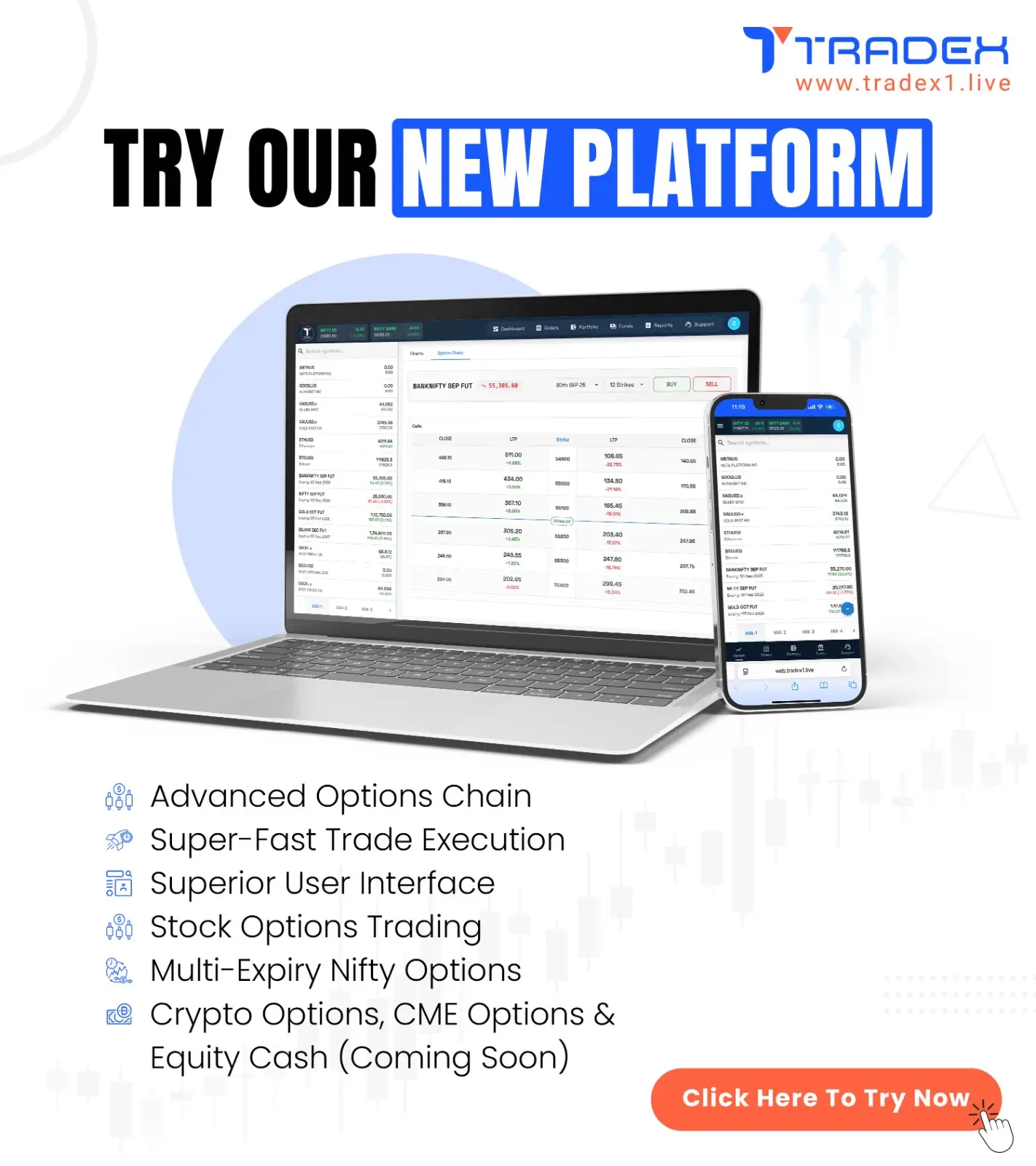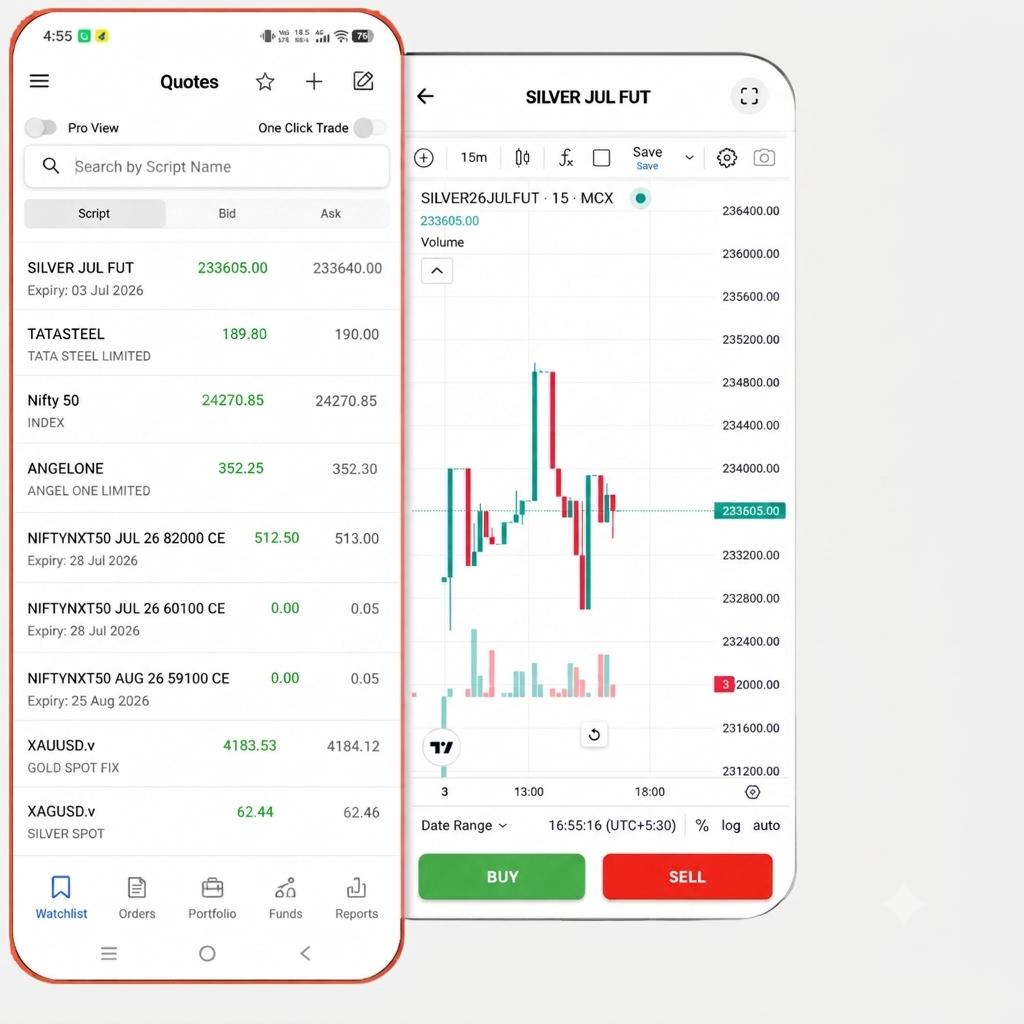
Trading used to mean phone calls to a broker, signed slips, paper contracts, and a clearing system that took days. None of that exists anymore. Today an entire trading account lives on your phone, orders fill in milliseconds, and the same person who couldn’t get a broker’s attention in 2005 is now placing live trades across equities, derivatives, commodities and global CFD markets — all from a single app.
Tradex1.live is built for exactly this generation of traders. One platform, every major asset class, zero brokerage on most trade types, leverage up to 500x where it makes sense, instant settlement, and a 24/7 deposit/withdrawal flow so your money is never stuck. Whether you’re placing your first ever trade or running an active multi-segment strategy, this page is the starting point. The deeper pages cover each segment in detail — this one covers the whole.
Online trading is the buying and selling of financial instruments — shares, derivatives, commodities, currencies, indices — through a digital platform that connects you directly to exchanges or to a broker who routes orders to them. You log in, see live prices, place orders, and exit positions whenever you choose. The whole process that used to need a middleman now sits in your pocket.
In India, trading happens primarily on four exchanges — NSE and BSE for stocks and equity derivatives, MCX for commodities like gold and crude oil, and NCDEX for agricultural commodities. All of it is regulated by SEBI. Tradex1.live gives you access to these instruments plus CFD-based derivatives that let you trade global stocks, indices and currencies under one unified account.
Traders generally fall into four buckets based on holding period:
Most successful traders pick one style and master it, then maybe add a second much later. The traders who fail usually try to be all four at once
| Segment | Risk Level | Complexity | Trading Hours | Target Audience |
|---|---|---|---|---|
| Equity (Cash) | Low | Low–Medium | 9:15 AM–3:30 PM | Beginners, investors |
| Intraday Equity | Medium–High | Medium–High | 9:15 AM–3:30 PM | Active day traders |
| F&O | High | High | 9:15 AM–3:30 PM | Experienced traders |
| Commodity | High | Medium–High | 9:00 AM–11:30 PM | Evening traders |
| CFD | Very High (up to 500x) | High | Extended global hours | Multi-asset traders |
The line between a profitable trader and an account-blower isn’t analysis. Both probably have similar charting skills. The line is risk management. Here are the principles every Tradex1.live trader should bake into their workflow:
Online trading is buying and selling shares, derivatives, commodities or other financial instruments through a digital platform connected to the stock exchanges. Instead of calling a broker, you log into an app, see live prices, and place orders yourself. Everything from order placement to settlement happens electronically.
Sign up on a trading platform like Tradex1.live, complete eKYC, fund the account with a comfortable amount, pick one segment and one strategy, start with very small position sizes, and always use a stop-loss. The biggest beginner mistake isn’t a bad strategy — it’s risking too much per trade.
You can start trading on Tradex1.live with as little as ₹5,000–₹10,000. With the available leverage on select instruments, even small capital is enough to learn the mechanics. Don’t focus on growing the account fast — focus on learning while losing little.
For complete beginners, cash equity trading in large-cap stocks (like Reliance, HDFC Bank, TCS, Infosys) is usually the cleanest place to start. Mechanics are simple, leverage is low, and the learning curve is gentler than derivatives. Once you understand how prices move and how you react to losses, you can step into intraday or options.
Trading on SEBI-regulated platforms and exchanges is structurally safe — your funds are held under regulated frameworks, transactions happen on regulated exchanges, and there’s recourse if something goes wrong. The actual risk in trading is market risk — losing money on bad trades. Use stop-losses, manage position sizes, and the regulatory side takes care of the rest.
Trading aims to profit from short-term price movements (intraday to weeks). Investing aims to grow wealth over years through compounding, dividends and fundamental value. Traders rely on charts and momentum. Investors rely on financials and patience. Different skills, different mindset, different timeframes.
Leverage is using borrowed funds to control a larger position than your own capital allows. A 10x leverage means ₹1 of your capital controls ₹10 of trade value. Tradex1.live offers leverage up to 500x on select instruments. It magnifies gains and losses equally, so always use a stop-loss when trading with leverage.
Typical trading charges include brokerage, STT (Securities Transaction Tax), exchange transaction charges, SEBI charges, GST and stamp duty. Tradex1.live charges zero brokerage on most trade types, so the only costs are the statutory ones — which are unavoidable on any platform but kept to the minimum.
Yes. Tradex1.live works fully on mobile and on the web. For active intraday trading, the web platform on a larger screen is usually better because you can see more chart context. For monitoring positions and placing occasional trades, mobile is fine.
Equity and equity derivatives (F&O) trade from 9:15 AM to 3:30 PM IST, Monday to Friday, with a pre-open session from 9:00 AM. Commodity markets stay open from 9:00 AM to 11:30 PM IST. Currency markets close at 5:00 PM. CFD markets on Tradex1.live extend access to global hours beyond the Indian exchange timings.
Online trading is one of the few skills you can teach yourself, scale to the level of your discipline, and run from anywhere. Tradex1.live takes care of the platform side — every major segment, zero brokerage, 500x leverage, instant settlement and 24/7 fund movement. Your part is choosing a segment, picking a strategy, and showing up with discipline. The platform is ready when you are.