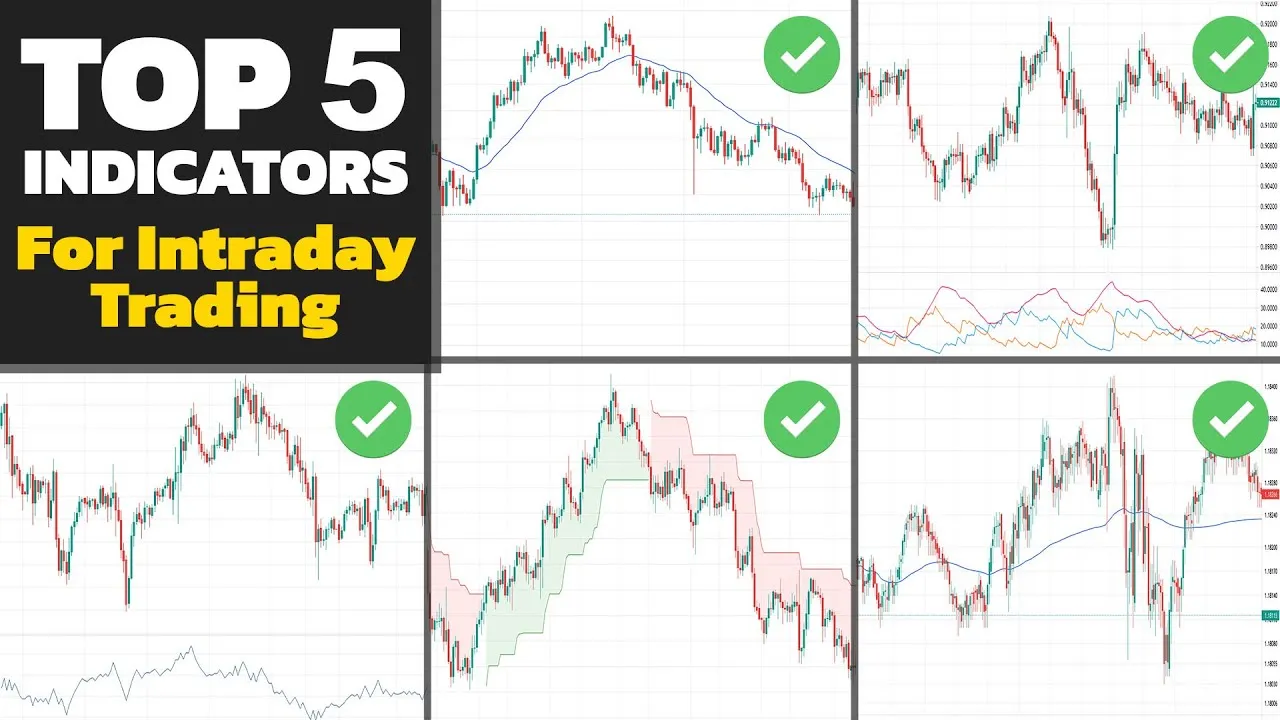
Let’s be honest. Intraday trading can feel like staring at a washing machine. Prices go up, down, sideways. You click buy, and it drops. You sell, and it rips higher. The difference between frustration and consistency often comes down to the tools you put on your chart. I’ve tested dozens of indicators over the years. Some are useless noise. A few actually help. In this post, I’ll walk you through the ones that give me a real edge—and show you how to combine them into a simple, high‑accuracy setup.
If you’re serious about improving your technical analysis for intraday trading, this is where you start.
What Makes an Indicator Worth Using for Intraday
You don’t need a screen full of colors and lines. What you need are indicators that do three things well: show the trend, confirm momentum, and tell you if volume backs the move. When those three align, you have a trade worth taking. When they don’t, you sit on your hands.
A clean approach to technical analysis for intraday trading keeps things simple. Two or three tools, used the right way, beat a messy dashboard every time.
My Go‑To Indicators for High Accuracy Trades
Moving Averages – The Trend Filter
I use three Exponential Moving Averages: 9, 20, and 50. The 9 and 20 give me short‑term momentum. The 50 tells me the broader intraday trend. If the 9 is above the 20 and both are above the 50, I only look for longs. If they’re stacked the opposite way, I only look for shorts. It’s a simple rule that keeps me on the right side of the market.
RSI – Spotting Exhaustion Before It Happens
RSI is great for catching momentum shifts. The standard 14‑period setting works fine. I ignore the 70/30 overbought/oversold levels in strong trends. Instead, I watch for divergence. When price makes a lower low but RSI makes a higher low, I know the selling is running out of steam. That’s often my early warning for a reversal.
VWAP – The Anchor
VWAP is my favorite intraday tool. It shows the average price weighted by volume. Big institutions use it to gauge fair value. When price stays above VWAP, buyers are in control. When it stays below, sellers are. I use VWAP as a bias filter. If I’m long, I want price above VWAP. If I’m short, I want it below.
Building a Setup That Actually Works
Here’s the combination I’ve settled on after years of trial and error.
For a long trade:
– 9 EMA above 20 EMA
– Price above 50 EMA
– RSI above 50
– Price above VWAP
For a short trade:
– 9 EMA below 20 EMA
– Price below 50 EMA
– RSI below 50
– Price below VWAP
When all four conditions line up, I look for an entry. I usually wait for a pullback to the 20 EMA or VWAP to get a better price. Stop loss goes below the recent swing low for longs, above the recent swing high for shorts. I take profit at the next obvious support or resistance.
That’s it. No magic. No secret sauce. Just a repeatable way to filter out junk trades.
Why This Works for Technical Analysis for Intraday Trading
Most traders lose money because they take too many trades. They chase every wiggle. This setup forces you to wait. You only act when trend, momentum, and volume agree. That patience alone improves your win rate.
I’ve used this on 5‑minute and 15‑minute charts. It works best during the London and New York overlaps when liquidity is high. During quiet Asian hours, I dial back the size or just watch.
Common Mistakes I See All the Time
Putting ten indicators on one chart. You end up with conflicting signals and analysis paralysis. Pick a few and learn them inside out.
Ignoring the bigger picture. Indicators work differently in a range than in a trend. If the market is choppy, this setup won’t perform well. Know when to sit out.
Using the wrong timeframe. A strategy that works on a 15‑minute chart often fails on a 1‑minute chart. Find the timeframe that matches your personality and stick with it.
Trading without a plan. I used to do this. Enter a trade, then figure out where to get out. That’s a recipe for disaster. Now I always know my stop and target before I click.
Tools That Make This Easy
You need a platform that lets you set up these indicators quickly and save your layouts. I use Tradex1.live because it’s clean and fast. I have my 9, 20, 50 EMAs, RSI, and VWAP all on one chart. I save the template, and it’s ready every morning. No fuss.
Tradex1.live also has a demo mode. That’s where I test new ideas without risking real money. If you’re learning technical analysis for intraday trading, demo is your best friend.
Start Simple, Stay Disciplined
You don’t need to be a genius to trade intraday. You need a clear setup and the discipline to follow it. The one I shared here is simple enough for a beginner but powerful enough for experienced traders.
Master this first. Once you’re consistent, you can explore other tools. But don’t fall into the trap of constantly adding more. The cleaner your chart, the clearer your mind.
Risk Disclaimer: Trading forex and other financial instruments on margin involves a high level of risk. It may not be suitable for all investors. You could lose some or all of your invested capital. Make sure you fully understand the risks and seek independent advice if necessary.