The biggest advantage that futures trading brings is: it lets traders participate in market movements without owning the actual asset.
Instead of buying gold, crude oil, Nifty, Bank Nifty, or agricultural commodities directly, futures contracts have become a popular choice in India’s trading ecosystem.
Trader Reviews





They allow traders to take advantage of short-term market fluctuations without heavy capital investment.
But as the market wisdom goes,“no risk, no reward.”
Futures trading is powerful, yet unpredictable. It can amplify profits when timing is right, but it can also magnify losses just in the blink of an eye if the market moves against you.
That’s why understanding the system is half the battle won.
This guide explains futures trading in India, its working, benefits, risks, and key insights every trader should know.
Why Futures Trading Keeps Growing in India
Indian markets have changed dramatically over the past decade.
Today, traders aren’t even restricted to traditional types of stock investing.
They can access a broad range of opportunities via futures contracts which includes commodities, indices, and currency markets.
This has completely changed how participants approach trading.
With margin-based entry, traders can significantly control large positions utilizing relatively very small capital which makes futures highly attractive for active users.
As per 2026 market trends, the National Stock Exchange of India derivatives segment continues to dominate, contributing well above 90% of total exchange turnover.
It highlights how futures and options have become the foundation of modern trading in India. Due to this growth, there are different types of traders that are attracted to:
- Active traders
- Hedgers
- Commodity market participants
- Short-term speculators
- Experienced investors using leverage strategically
Understanding Futures Trading in Simple Terms
A futures contract is kind of an agreement which is used to buy or sell an asset at a pre-decided price on a future date.
These assets may include precious metals as well like gold and silver, and others are crude oil, natural gas, indices like Nifty 50 and Bank Nifty, individual stocks, or agricultural commodities.
The key takeaway is that: “traders don’t need to own the asset.”
Rather, they take positions based on market expectations. In other words, they are simply “betting on the direction” of the market, whether it moves up or down.
A Simple Example For Futures Trading
Let’s say the prices of the crude oil are at Rs.6,500/unit. A trader expects prices to rise and enters a buy position. After a few days, prices significantly climbed up to Rs.6,700. The trader closes the position and earns profit from the difference.
But the market is a two-way street. If prices fall instead, the trader ends up on the losing side. That’s why timing and market direction are everything in futures trading.
One Feature That Changes Everything: Leverage
The biggest reason traders choose futures contracts is because of the leverage.
As it allows traders to control larger positions by putting a smaller amount of capital.
For example, a futures contract worth Rs.5 lakh may require only a fraction of that amount as margin. This brings the potential for bigger returns. Although, leverage works both ways.
A favorable move can increase profits. An unfavorable move can increase losses just as quickly. That is why risk management remains an important aspect for futures traders.
Why Traders Use Futures Contracts
Traders don’t step into futures markets for a single reason; different goals drive different strategies.
To Speculate on Price Moves
A large group of traders enters futures just to profit from price fluctuations. Simply put, they try to “ride the momentum” whether prices move up or down, as futures support both long and short positions.
To Hedge Against Uncertainty
Futures are also used as a protective shield. Let’s say, a trader may lock in prices and use futures contracts to avoid future losses if in the case the market declines.
To Diversify Market Access
Futures contracts provide exposure to the magnitude of segments like equities, commodities, currencies, and stocks. This flexibility allows traders to “spread their wings” and diversify strategies across markets.
The Markets Most Popular Among Futures Traders
- Index Futures
It remains serve as one of the most actively traded instruments in India.
Popular contracts incorporate the following:
- Nifty 50 Futures
- Bank Nifty Futures
- FinNifty Futures
These contracts allow traders to participate in broader market movements rather than individual stocks.
- Commodity Futures
It continues to attract a significant range of customers.
Some of the popular commodity futures include:
- Gold
- Silver
- Crude Oil
- Natural Gas
- Copper
Commodity prices are often influenced by global events, making them attractive for active traders.
- Stock Futures
Many large-cap stocks offer futures contracts.
These allow traders to speculate on individual company price movements without purchasing shares outright.
What Makes a Good Futures Trading Platform?
The platform behind the trade matters more than many traders realize.
Several factors influence the overall futures trading experience.
Fast Order Execution
Markets move quickly. Delayed execution can impact trade entries/ exits, especially at the time of volatile periods.
Competitive Trading Costs
Frequent trading is something that can boost transaction expenses. Many active traders pay close attention to brokerage structures when choosing a platform.
Reliable Performance
A platform should remain responsive even when trading volumes increase. Volatility is often when traders need reliability the most.
Easy Fund Management
Quick deposits/withdrawals of the funds help traders remain flexible and prepared for market opportunities.
Popular Futures Trading Platforms in India
There are many platforms that are commonly used by the traders by futures traders and give them the best returns
| Platform | Key Strength | Best For |
| Tradex1.live | Active trading flexibility | Futures and commodity traders |
| Zerodha | Advanced trading ecosystem | Technical traders |
| Upstox | User-friendly experience | Beginners |
| Dhan | Futures-focused tools and advanced features | Active derivatives traders |
| ICICI Direct | Integrated banking and trading ecosystem | Traders seeking an all-in-one platform |
Why Many Futures Traders Are Exploring Tradex1.live
As futures trading becomes quite competitive, traders are seeking platforms that combine flexibility plus cost efficiency.
Tradex1.live becomes their go-to choice due to the following aspects.
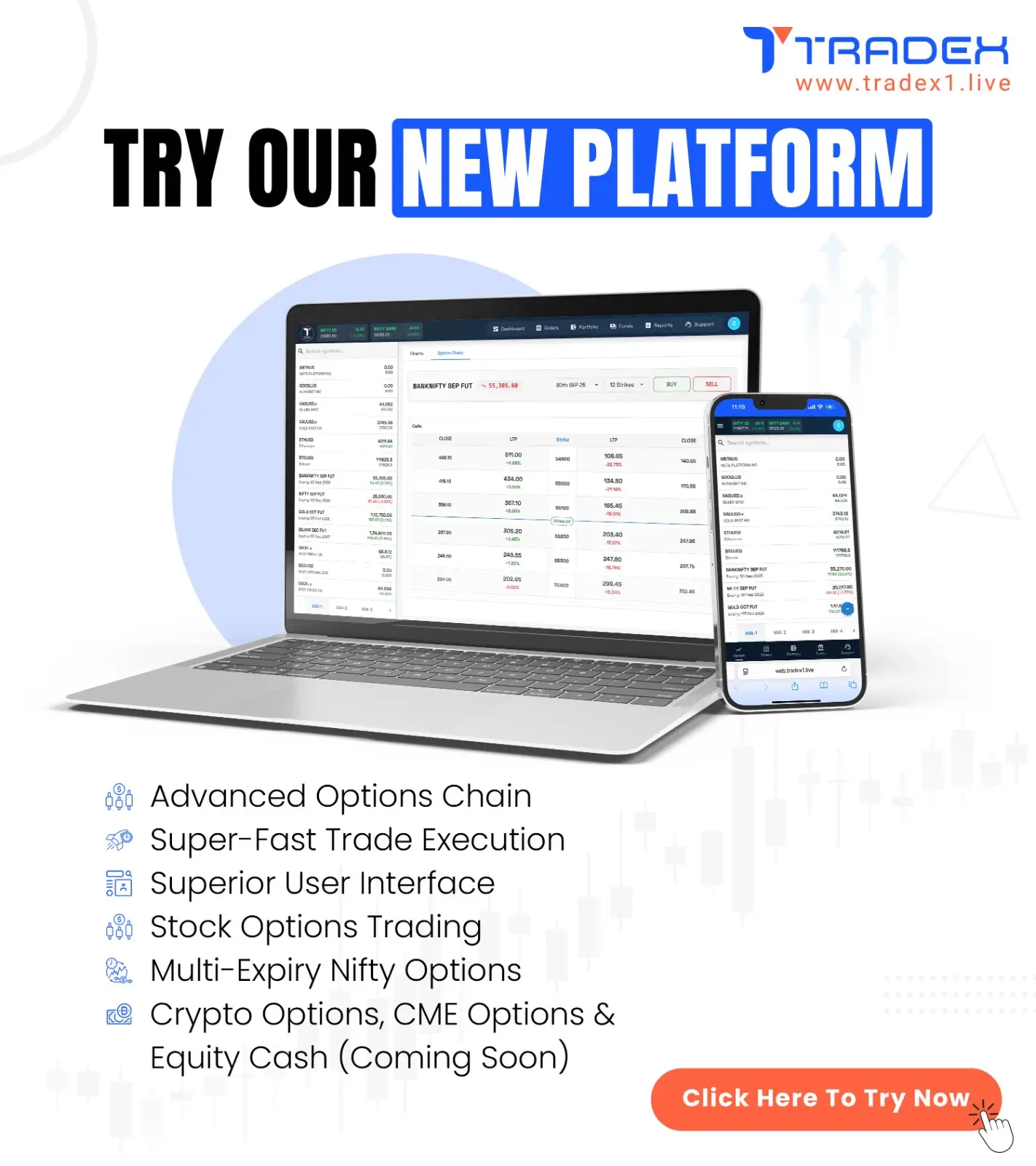
Zero Brokerage Trading
Reduce costs. Focus on opportunities.
Active traders leverage zero brokerage and retain more capital over the span.
Up to 500X Margin
Greater market exposure with lower capital.
Margin facilities can provide an additional level of flexibility to traders to maximize capital.
Flexible Capital Deployment
Put capital where the opportunity is.
Active traders often look for a flexible trading environment that can make it easier to put capital whenever the opportunity is. That’s how tradex1.live becomes their reliable option. Click here to join!
A Busy Trading Session Reveals Everything
Most platforms perform well when markets are calm but the real test comes at the time of the volatility. Imagine crude oil prices reacting in a sharp manner when global supply announcements happen.
Thousands of traders rush to enter and exit positions. In this scenario, prices move rapidly and charts update continuously. This is often when traders discover whether they truly trust their platform.
Common Mistakes New Futures Traders Make
Below are some of the mistakes that traders usually do which includes
Trading Without a Risk Plan (having no exit strategy)
Using Too Much Leverage( increases risk significantly)
Ignoring Market Volatility( markets can move quickly)
- Focusing Only on Potential Profits (not evaluate both reward and risk)Read more blog : Futures & Options (F&O) Trading Explained — Beginner Guide India 2026
The Final Word
Futures trading offers traders a powerful way to participate in market movements across commodities, indices, currencies, and stocks.
The ability to trade with margin, benefit from both rising and falling markets, and access multiple asset classes has made futures one of the most popular trading segments in India.
However, success in futures trading requires more than market predictions.
Platform selection,features and other aspects all play an important role.
Want a platform that gives flexibility and zero brokerage trading? Tradex1.live platform is worth exploring in 2026. Click here to start your trading journey.
Frequently Asked Questions
- Is futures trading legal in India?
Yes it is regulated but it is better to choose the authorized brokers.
- Can beginners trade futures?
Yes, but beginners should first learn the tactics, then go ahead with trade futures.
- What assets can be traded through futures contracts?
Traders can trade different assets which includes commodities (metals, energy), indices, stocks, and more.