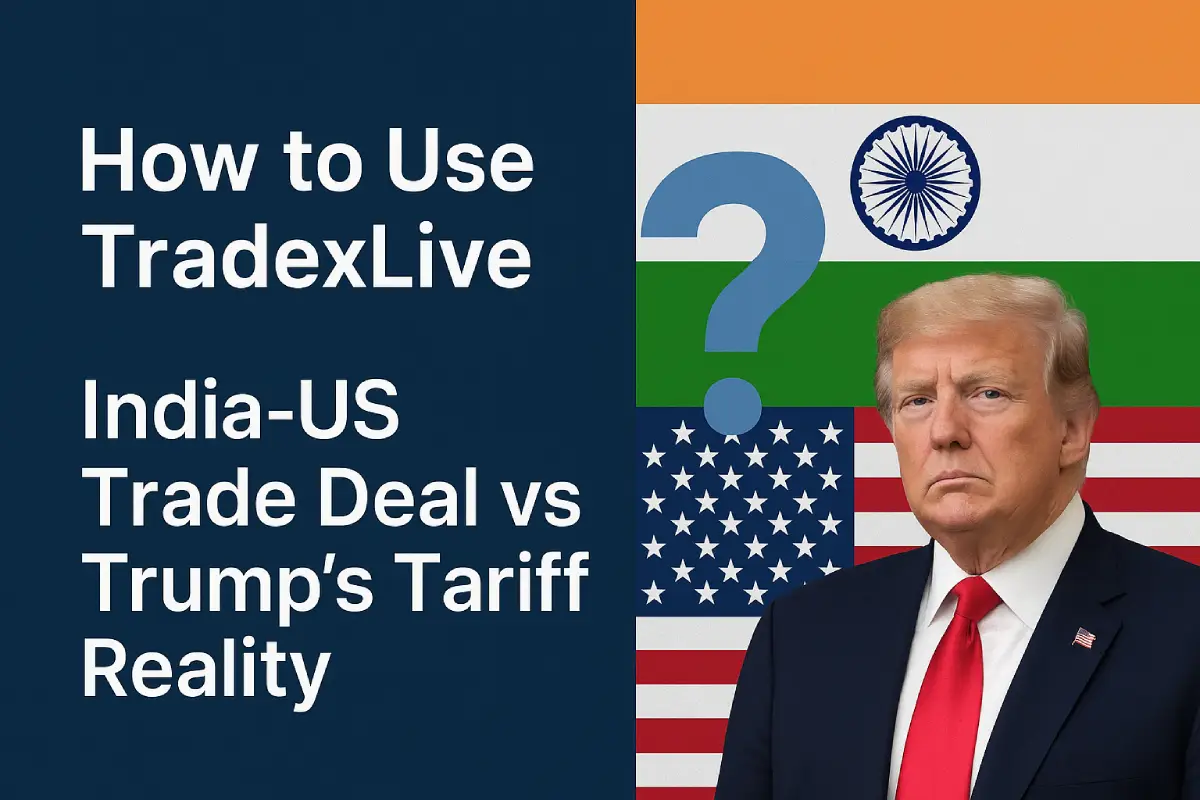
The announcement of an India–U.S. trade deal has generated a sense of excitement among many investors and government officials about the potential for increased trade and economic growth through increased collaboration. This excitement often blurs out one important point – that is, the tariffs on U.S. imports established under former President Donald Trump, and which still exist, almost pose a barrier to realizing any benefits of a new agreement.
The Reality of Tariffs
Trade negotiations could improve access and cooperation, but the Trump administration’s tariffs are alive and well. These tariffs are across the board, limiting India’s ability to increase its exports especially in sectors such as IT, pharmaceuticals, and textiles.
Experts warn that while India’s tariffs may go down in some sectors, they will still be considered high internationally. Cutting tariffs down to 15-20%, may not be enough to allow the trade deal to be viewed as transformational.
Also, the U.S. is unlikely to abandon its protectionist policies in the near future. Domestic economic policy continues to favor domestic manufacturing and industry. As such, unless both sides deal with these tariffs directly, the potential of the trade deal is mostly hypothetical.
Investor Sentiment: Hope Meets Caution
Investor sentiment regarding the India–U.S. deal has attracted positive reactions, particularly in those areas where the most benefit is expected. Early announcements have seen positive stock market movement, spearheaded by rallies in technology and manufacturing stocks.
Nevertheless, those optimistic expectations are tempered by ongoing trepidation. Headlines notwithstanding, U.S. tariffs on Indian exports—including on major export sectors such as steel, textiles, and apparel—still remain.
Those tariffs raise the costs of exports, thus lowering margins and ultimately eroding overall earnings for the companies subject to the tariffs. Accordingly, a number of market participants now find themselves balancing hope and realism as they await actual policy changes versus what was previously simply a diplomatic gesture.
Behind the Diplomatic Curtain
High-level conversations between Indian and U.S. officials have created an impression of goodwill and mutual respect from both sides. They have spoken of common values, economic congruence, and long-term partnerships.
Behind the scenes, however, negotiations have stalled on concrete issues, especially tariffs.
The U.S. has maintained tariffs to justify national security and economic self-interest.
India has suggested, in certain sectors such as IT and pharma, that it is open to reducing tariffs. However, the U.S. is in no rush to eliminate its current tariff regime, and appears to prefer enhancing its own bargaining leverage, and employing tariffs to protect U.S. industries, instead of coming to meaningful temporary compromises.
Understanding Trump’s Tariff Legacy
The Trump administration made a sea change in the trade landscape in the United States and the average tariff rose from 2.5% to somewhere between 15% and 20% — especially on steel, aluminum and certain manufactured goods.
Such policies were intended to lower trade deficit and bring back U.S. manufacturing but they also contributed to global supply chain disruption — and India was one of the most affected partners.
These tariffs impacted many key Indian export sectors, which included IT services, engineering goods and pharmaceuticals, with U.S. duties causing their products to be less competitive. The effects of these tariffs are still felt today and will undermine any new trade agreement.
The Disconnect: Market Euphoria vs Trade Reality
The excitement about a possible deal overlooks a key issue — the ongoing cost burden from U.S. tariffs.
For example, exports of Indian steel and aluminium continue to be subject to significant duties. These costs diminish the attractiveness of exports and reduce demand, lowering growth potential in critical sectors.
Similarly, talks on sensitive services such as India’s IT exports are progressing slowly. Without clarity or firm commitments, the level of enthusiasm we have seen in financial markets may be premature or overstated.
Economic Impact on Indian Industries
High tariffs diminish India’s export competitiveness. With prices increasing for U.S. consumers, demand for Indian products may dip. This is significant for labor-intensive, growth sectors like textiles and pharma.
The outcome? Slower manufacturing, decreased job opportunities, reduced foreign direct investment in affected sectors.
Alternatively, trade deals (for example, the U.S.–Mexico–Canada Agreement or “USMCA”) established rapid tariff reductions and domestic trade efficiencies. A slow tariff reform process like that of India’s could result in judging trade agreements like USMCA with a delay or minimized outcomes.
There is a wedge (and misalignment) between market enthusiasm and realized economic effect, and the wedge could widen without a proper tariff remedy.
Global Repercussions and Investor Outlook
Broadly, markets remain hesitant. Bilateral deals provide optimism, but shifts in tariff regimes still appear erratic.
In India, investors are hoping to find evidence that the U.S. is prepared to reduce duties, but there is currently no indication that Washington intends to back off.
Uncertainty affects supply chains and leads to additional costs. Workers see delaying investments and companies are relocating production to prevent exposure to tariff-related effects.
The bilateral nature of the India–U.S. disagreement in tariffs can also negatively impact investor confidence in unrelated markets. Uncertainty, in and of itself, becomes a risk.
Be a Nimble Trader: Tariffs Demand Tools, Not Just Optimism
In this evolving situation, the ideal approach for the investors and traders will be to stay vigilant, informed and flexible.
Take advantage of contemporary trading software that takes the headache out of movements in the market resulting from trade announcements. Trading platforms like Tradex.live provide instant commission-free trades, and immediate access and sharing of data and other tools enabling investors and traders to swiftly react to market news – a requisite in today’s high-speed markets.
Knowing how to use Tradex.live is not merely technical – it is a strategic advantage. When changes in tariffs occur, or when trade deals are either initiated or delayed, individuals using Tradex.live are provided the ability to quickly adjust their positions – with no commission fees.
Final Thoughts: Euphoria Needs Balance
Yes, the India–U.S. trade deal holds promise. But we need to temper that enthusiasm with a more realistic assessment of the policy headwinds, which will persist.
The probability of success of any trade deal ultimately depends on whether both countries can close the tariff gap. Until then, remain optimistic but cautious.
Investors who couple optimism with preparedness—and who use platforms like Tradex.live to stay nimble—will find themselves in the best position to capitalize on whatever turns the story takes next.
Also read: Download app: Android User | IOS User | Web Trader
Reach Tradex.live: https://tradex.live/links/