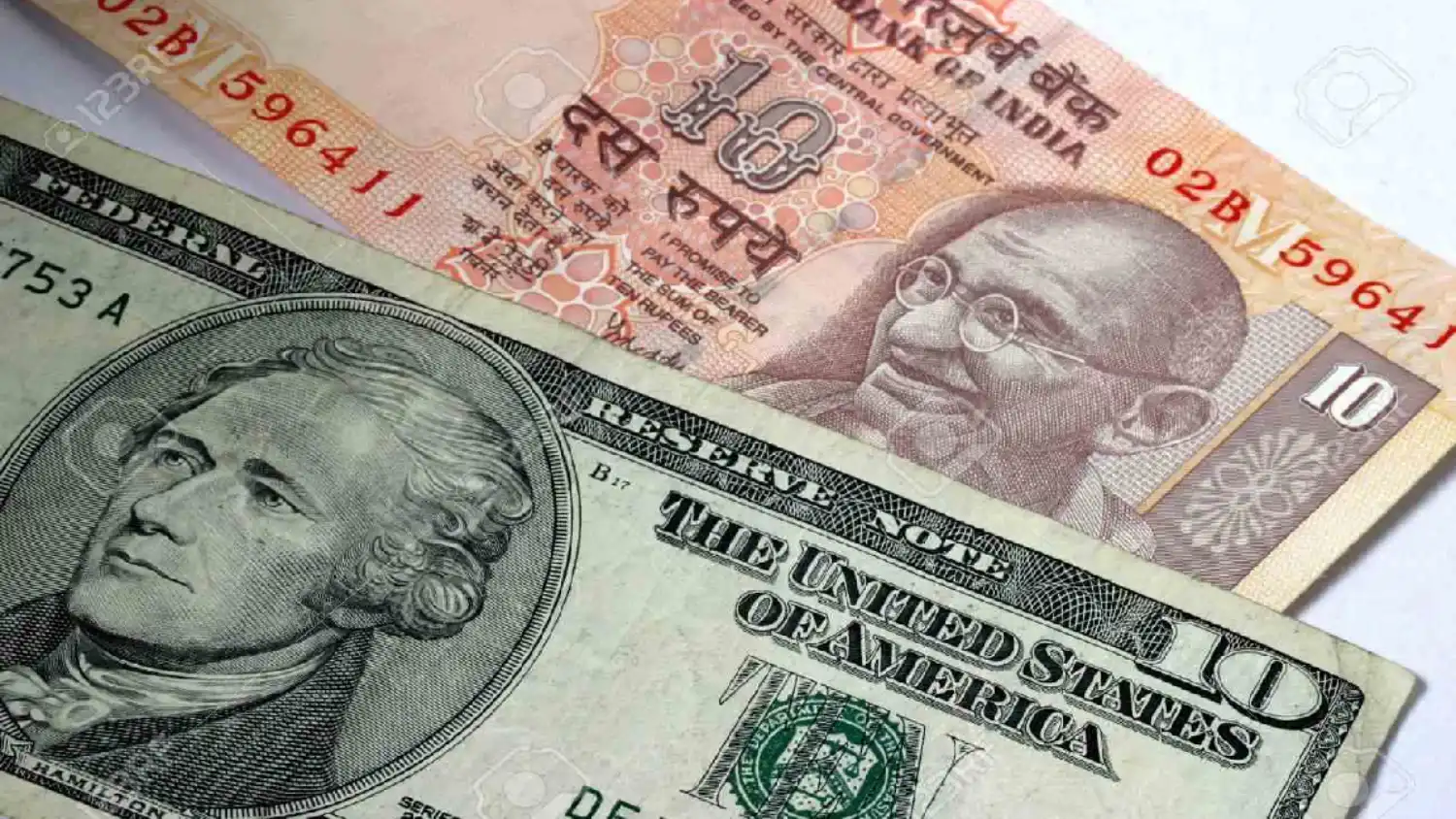
Finance Minister Nirmala Sitharaman recently addressed concerns regarding the Indian rupee’s performance, particularly in relation to the US dollar. She reassured that despite the rupee’s slight depreciation against the dollar, it remains stable when compared to most other global currencies. Sitharaman highlighted that India’s economic fundamentals are strong, which has helped maintain this stability.
In an interview with PTI, Sitharaman acknowledged that the rupee has depreciated by around 3% against the US dollar in recent months. This depreciation has led to costlier imports, raising concerns among economists and the public alike. However, she dismissed claims that the rupee is broadly weak. According to her, the rupee has held steady against most major global currencies, indicating that the situation is not as dire as some critics suggest.
“Yes, I am concerned about the rupee’s depreciation against the dollar, but I do not agree with the blanket statement that the rupee is weakening overall. Our macroeconomic fundamentals are solid. If they weren’t, the rupee wouldn’t be stable against so many other global currencies,” Sitharaman said.
Rupee Under Pressure but Holding Strong Globally
The rupee has faced significant pressure in recent months, largely due to external economic factors. Despite this, it remains one of the least volatile currencies among its Asian and global counterparts. The reasons for its recent decline against the dollar include a widening trade deficit and a stronger US dollar. The US Federal Reserve’s indication that there will be fewer interest rate cuts in 2025 has also strengthened the dollar, contributing to the rupee’s depreciation.
To manage this situation, the Reserve Bank of India (RBI) has intervened in the foreign exchange market. Reports indicate that the RBI has spent around USD 77 billion from its foreign exchange reserves to prevent the rupee from falling sharply. As a result, India’s foreign exchange reserves have decreased from USD 701.176 billion on October 4, 2024, to USD 629.557 billion as of January 30, 2024.
Despite these challenges, Sitharaman remains optimistic. “The rupee’s volatility is primarily against the dollar. Compared to other currencies, the rupee has shown much greater stability. The RBI is carefully monitoring the situation and intervenes in the market only when necessary to avoid extreme volatility,” she explained.
She also dismissed criticisms that focus solely on the rupee’s depreciation without considering the broader economic context. “Critics are quick to point out the rupee’s volatility, but these arguments often lack a deeper understanding of the global economic factors at play. In the current environment, where the dollar is strengthening, it’s important to view the rupee’s performance in that specific context,” she added.
A Broader Perspective on Currency Fluctuations
Sitharaman emphasised that currency fluctuations are normal in a globalised economy, especially when major economies like the US undergo significant policy changes. The strengthening of the US dollar has affected many currencies worldwide, not just the Indian rupee. Factors such as changes in US monetary policy, geopolitical tensions, and global trade dynamics all play a role in influencing currency values.
“In today’s economic landscape, the rupee’s relationship with the dollar needs to be viewed through a nuanced lens. Fluctuations are inevitable, but they don’t necessarily indicate a weak economy. On the contrary, our ability to maintain stability against most other currencies reflects the resilience of our economy,” Sitharaman stated.
She also highlighted that India’s strong macroeconomic indicators, such as steady GDP growth, controlled inflation, and robust foreign exchange reserves, provide a solid foundation for the rupee. These factors help buffer the currency against external shocks and contribute to its overall stability.
What Lies Ahead?
While the Finance Minister remains confident in the rupee’s stability, she acknowledged that continuous monitoring and prudent economic management are essential. The RBI will continue to play a crucial role in managing currency fluctuations through strategic interventions in the foreign exchange market.
Sitharaman concluded by urging critics and analysts to adopt a more comprehensive approach when evaluating the rupee’s performance. “It’s easy to criticise based on short-term trends, but a thorough analysis requires looking at the bigger picture. Our economy is resilient, and the rupee’s stability against most global currencies is a testament to that,” she said.
In summary, while the rupee has faced some challenges against the US dollar, its overall performance remains strong. The Indian government and the RBI are committed to maintaining economic stability, ensuring that the rupee continues to reflect the strength of India’s economic fundamentals.
Stay tuned with the most trusted CFD brokers in India for more such updates!
Download app: Android User | IOS User | Web Trader