Introduction
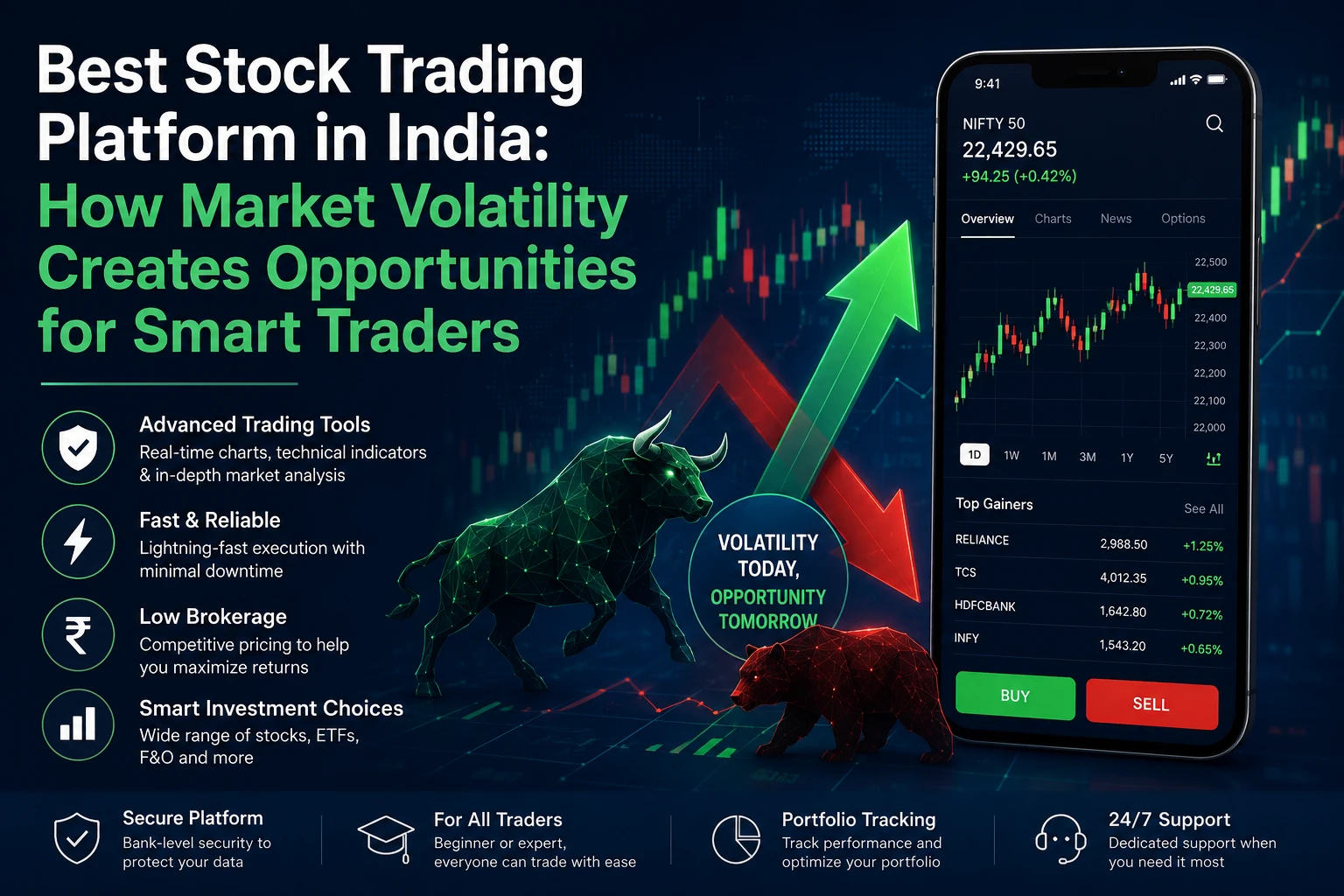
Market volatility is not always the enemy. For disciplined traders, the best stock trading platform in india is not just the one with low costs; it is the one that helps them act quickly, manage risk, and avoid emotional decisions when prices move sharply.
A good trading platform should offer smooth order execution, transparent costs, risk-control tools, stable access, easy deposits and withdrawals, and enough learning support for traders to understand what they are doing before they risk real money.
Trader Reviews



Indian traders in 2026 are not only looking for access. They are looking for control. Markets move fast, news travels faster, and one poor trade without a stop loss can damage weeks of discipline.
What Makes The Best stock trading platform in india?
A trading platform is the bridge between a trader and the market. It helps users:
- Place buy and sell orders
- Track live market prices
- Manage open positions
- Use charts for better analysis
- Access instruments such as equities, derivatives, commodities, or global markets
But calling any app “good” only because it looks clean is a mistake. A practical trading platform must perform well when markets are active. During volatile sessions, traders may face issues such as:
- Delayed order execution
- Unclear charges
- Poor withdrawal support
- Weak platform stability
- Limited risk-control features
That is why serious users look beyond design. They usually check:
- Platform stability
- Risk management tools
- Margin terms
- Customer support
- Withdrawal process
- Whether the platform encourages responsible trading instead of blind speculation
Why Indian Traders Are Paying Attention to the best stock trading platform in india
Indian traders have become more cost-aware, mobile-first, and execution-focused. Many active traders compare platforms based on brokerage, spreads, margin access, withdrawals, charting tools, and how quickly orders can be placed.
Market volatility has also changed user behaviour. Beginners often enter trading because they see fast market moves, but experienced traders know volatility only creates opportunity when paired with planning. SEBI’s investor guidance repeatedly stresses that investors should understand products, read documents carefully, and act according to their risk appetite.
There is also a serious risk side. SEBI-linked risk disclosures highlight that a large majority of individual traders in equity futures and options have historically made losses, which makes risk education essential before active trading.
How the best stock trading platform in India works in Real Trading Conditions
In real trading, the process looks simple from the outside. A trader logs in, studies the chart, selects an instrument, places an order, sets a stop loss, and manages the position. But the quality of the platform matters at every step.
For example, in intraday trading, liquidity affects entry and exit. Market volatility can widen price movement. Margin can allow larger positions, but it also increases exposure. A stop loss helps control damage, but only if the trader uses it with discipline.
Position sizing matters too. A beginner risking too much capital on one trade is not being bold; they are being careless. Smart traders usually decide their risk first and their profit target later. That is the difference between trading with a plan and gambling with a screen.
Key Benefits Traders Look For
Traders usually want three things: lower cost, faster access, and better control.
Lower trading costs can matter for active traders because frequent entries and exits can eat into capital. A mobile-first experience is also important because many Indian users track markets while working, travelling, or studying.
A simple interface helps beginners avoid confusion. Multiple market options help active traders explore different opportunities. Web trading access is useful for those who prefer larger screens and deeper analysis.
The best online trading platform India users is not always the flashiest one. It is the one that fits their trading style, risk appetite, and learning stage.
Risks Traders Must Understand Before Starting
This is the part that many platforms do not highlight enough, but traders must take it seriously.
Leverage can increase both profit and loss. If a platform offers a high margin, that does not mean every trader should use it. High leverage can wipe out capital quickly when the market moves against a position.
Market volatility can also move faster than expected. A stock, index, or commodity can react sharply to news, global cues, policy updates, or liquidity shifts. BSE’s investor education material recognises volatility risk as a real market risk where prices can fluctuate over time.
Beginners should avoid overtrading. Taking more trades does not mean becoming more skilled. In many cases, it simply increases mistakes. Stop loss, capital protection, and emotional control are not optional. Trading is not a shortcut to guaranteed income.
Where Tradex1.live Fits In
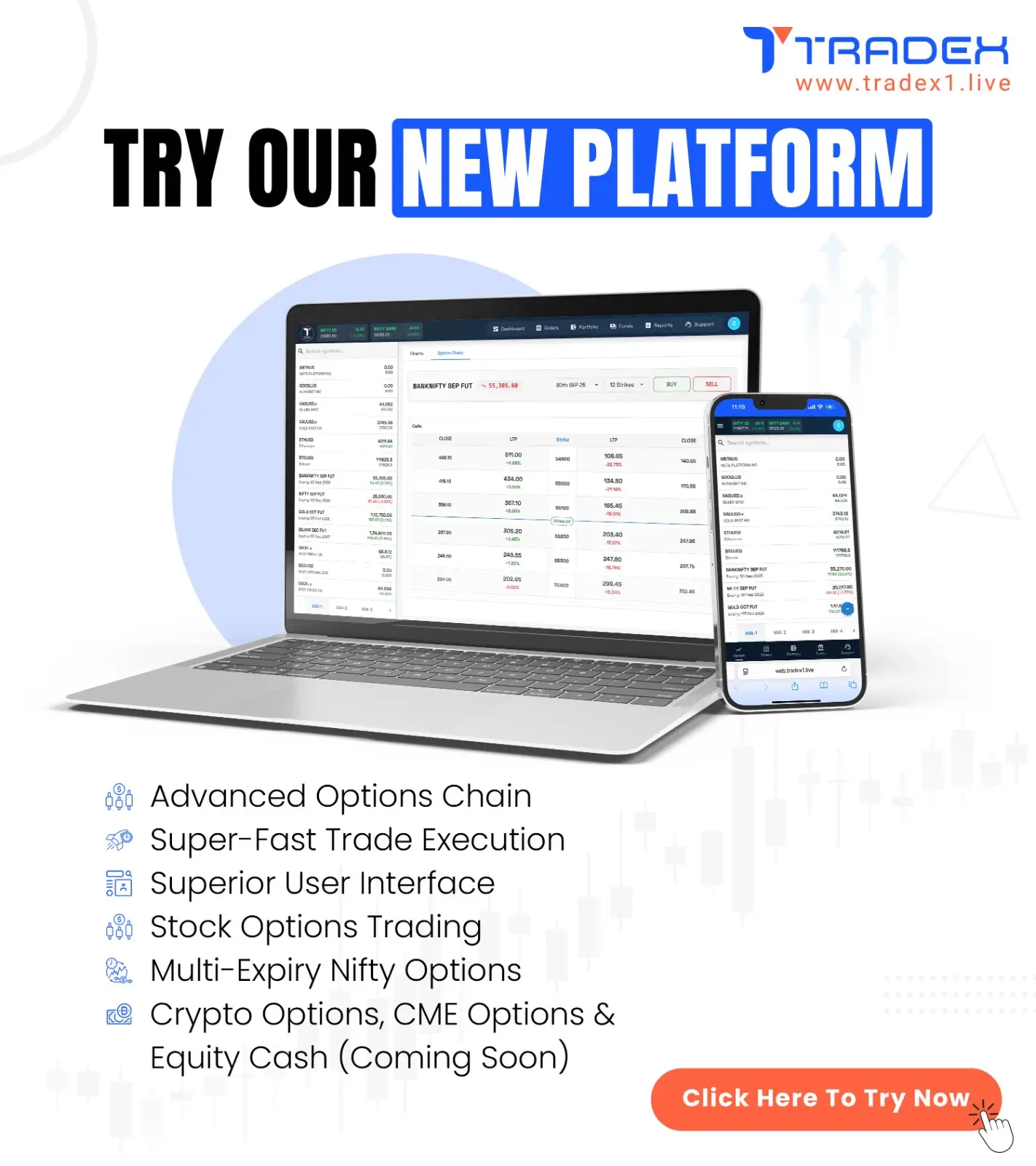
Tradex1.live positions itself for traders who want:
- Cost-efficient market access
- Flexible trading tools
- A platform experience designed for active market participation
- Web and mobile trading convenience
- Access to Indian and US stocks
- Commodity trading options
- Margin-based trading access
The platform highlights key features such as:
- Zero brokerage positioning
- 24/7 deposit and withdrawal support
- Web trading access
- Mobile trading access
- Indian and global market exposure
- Customer support
- Educational resources
However, traders should understand the risk side too:
- The website mentions “up to 500x margin”
- A higher margin can magnify both gains and losses
- Margin should be used carefully, especially by beginner traders
- Traders should not treat leverage as guaranteed earning potential
This makes Tradex1.live relevant for users comparing top stock trading platforms in India, especially those looking for:
- Lower transaction friction
- Active-market access
- Flexible trading features
- Cost-conscious trading options
Still, the smarter approach is to:
- Compare platform features
- Understand trading risks
- Check how the margin works
- Review deposit and withdrawal terms
- Start only after knowing how the platform works
How to Choose the Right Trading Platform
| What to Check | Why It Matters |
| Transparent charges | Traders should clearly understand all costs before using any online trading platform. |
| Zero brokerage terms | Check whether zero brokerage applies to all trades or only selected segments. |
| Platform stability | A stable platform is important during active or volatile market hours. |
| Withdrawal process | Easy and reliable withdrawals build trust and reduce unnecessary friction. |
| Stop-loss access | Stop loss helps traders manage risk and protect capital. |
| Order history | Clear order history helps traders review past trades and avoid confusion. |
| Margin details | Traders should understand how margin works before using leveraged positions. |
| Risk tools | Risk-control features support more disciplined trading decisions. |
| Customer service | Slow support can become a serious issue when real money is involved. |
| Educational resources | Beginner traders need guidance before entering volatile markets. |
| Trading discipline | A platform can provide access, but it cannot replace discipline, planning, and risk management. |
Quick Summary
- Volatility can create trading opportunities, but only with risk control.
- Low cost, fast execution, and platform stability matter for active traders.
- Margin trading can increase both gains and losses.
- Beginners should focus on learning, stop loss, and capital protection first.
- Tradex1.live may suit traders exploring zero brokerage positioning and flexible access, but comparison is still necessary.
Frequently Asked Questions
1. What is the best way to start trading as a beginner?
Start small, learn order types, use stop loss, avoid high leverage, and focus on understanding risk before chasing returns.
2. Is zero brokerage trading useful for active traders?
Yes, it can reduce trading costs, especially for frequent traders. But low cost does not remove market risk.
3. Does margin trading increase risk?
Yes. Margin allows larger exposure with less capital, but it can also increase losses quickly if the trade goes wrong.
4. What should I check before using a trading platform?
Check charges, execution speed, withdrawal support, risk tools, customer service, platform stability, and regulatory clarity.
5. Can trading guarantee regular income?
No. Trading cannot guarantee a regular income. Markets are uncertain, and losses are part of trading.
6. Is mobile trading suitable for beginners?
Yes, but beginners should not trade casually from mobile without a plan. Convenience should not replace analysis.
Conclusion
Choosing the best stock trading platform in india is not about finding the loudest claim. It is about finding a system that matches your trading goals, risk appetite, capital size, and level of experience.
Market volatility will always attract attention. Some traders will see it as an opportunity. Others will get trapped by speed, emotion, and leverage. The difference usually comes down to preparation.
Explore Tradex1.live only after understanding how trading works, how much risk you can handle, and whether its features fit your strategy. Learn first. Compare carefully. Protect capital. Then trade with discipline.