The announcement that the US will impose a 25% tariff on Indian imports with effect from August 1, 2025, has caused ripples throughout the markets and raised eyebrows across many sectors. For those observing the changing shape of the market on online trading platforms in India, this is a case of risk and opportunity offered by the pressure from above.
The tariff is somewhat unexpected and covers a wide range of Indian exports – from textiles to electronics, and imposes a penalty in connection with India’s energy and defence trade with Russia. While this penalty is justified as a response to “bad behaviour” in general international trade, it indicates increased geopolitical tension, too.
Why the Tariff Was Imposed
On July 30, former President Donald Trump announced the tariff, citing India’s high tariffs on US products. He called the country a “friend” as he indicated that its trade practices are unfair, especially given the existing $45 billion trade deficit with India.
The announcement was made on Truth Social, stating that it was an action to protect US economic interests. This appears to be a move to begin to renegotiate trade moving forward that may better support American exporters.
Scope and Sectors Affected
This 25% tariff could apply to a wide variety of goods—textiles, pharmaceuticals, electronics, automotive parts, and even some agricultural products.
Significant Sectors Affected:
Textiles & Apparel: Indian companies like Welspun and Vardhman may find losing price competitiveness due to competitors in Vietnam or Bangladesh.
Pharmaceuticals: Generic drug manufacturers like Sun Pharma and Dr. Reddy’s may face a higher cost of entry into the US, which could affect the cost and availability of medicines.
Jewellery and Leather: The Gems and Jewellery Export Promotion Council warned of job losses due to a deterioration in incoming orders from the US.
Auto Parts and Electronics: Exporters of these goods had already been working on narrow margins. Tariffs will cause delays or cancellations in their orders.
A Geopolitical Message
What is happening this time around that is different is an additional penalty associated with India’s ongoing trade ties with Russia, especially with oil and military equipment. This meshes with Washington’s broader policy of trying to dissuade the formation of Russian alliances while it is at war with Ukraine.
India, for its part, is defending those ties by claiming its ties with Russia serve its national interest. The United States appears to be saying that trade benefits will come more at the expense of, not despite, global diplomatic alignments.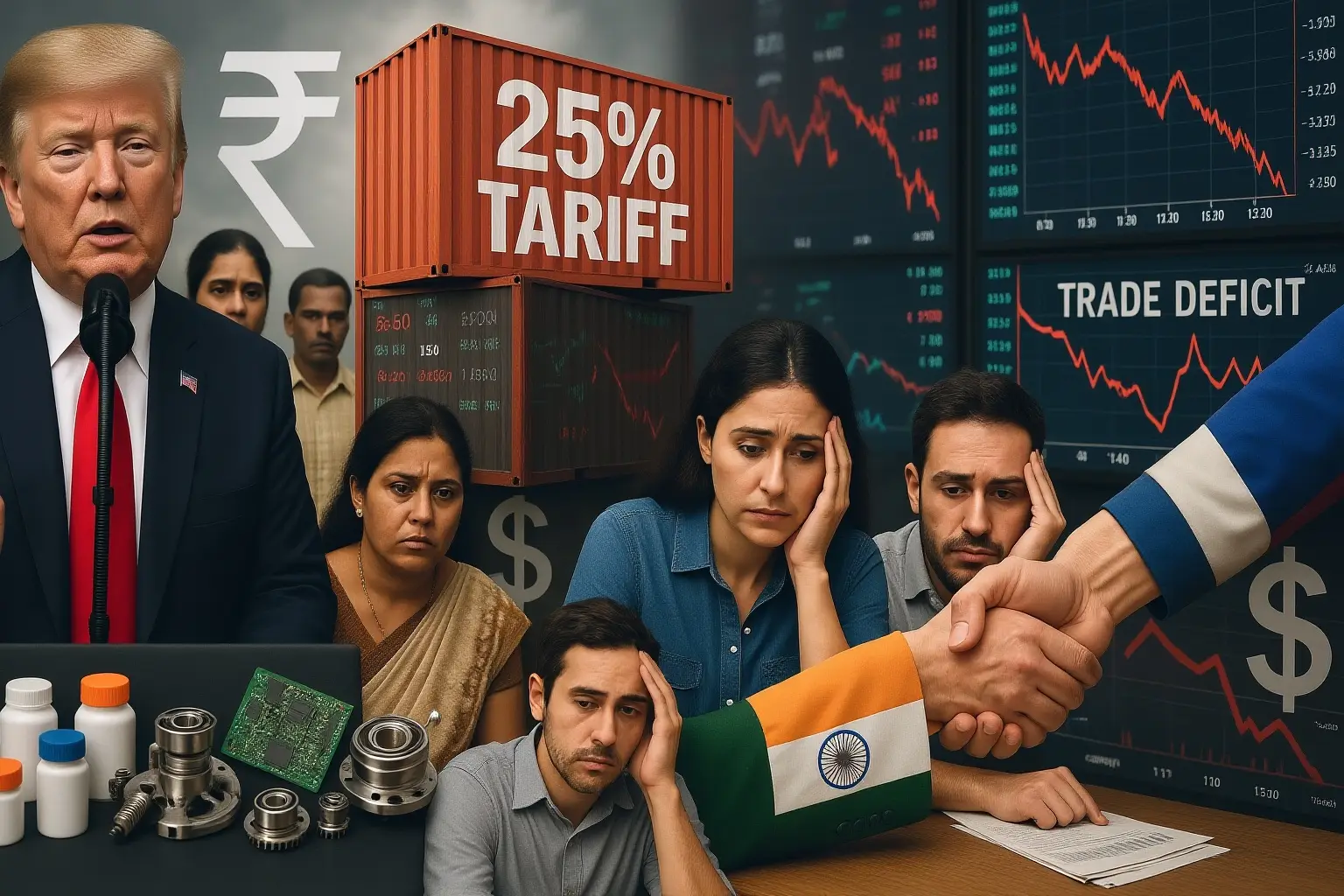
How MSMEs and Exporters Are Reacting
India’s micro, small, and medium enterprises (MSMEs) have clearly been one of the most impacted. These actors are responsible for a substantial amount of India’s exports, but many of them do not have the financial buffer to withstand shocks like this.
A sudden increase in costs means that Indian products now have a cost disadvantage in the US. As a result, many MSMEs are either beginning to look for new markets altogether or scaling back production as a risk management strategy.
In addition, Indian exporters across sectors, including textiles and clothing, are experiencing compounding effects on logistics costs, order delays, and nervous overseas buyers. For a fair few, the tariff does not strictly signal a tax, but rather that trade is now governed by different forces.
Impact on US Businesses and Consumers
The ramifications aren’t just limited to India. American companies that rely on Indian imports may see input costs rise, particularly in sectors like pharmaceutical imports, textile sourcing and electronics assembly. These costs could erode profit margins or be passed along to consumers, resulting in increased prices on common items like clothing, shoes, and generic medications.
Ongoing Trade Talks: Little Progress
After several rounds of negotiations, however, little progress has been achieved. The US seeks to have India further open its markets and reduce its tariffs on its products. Conversely, India wishes to protect its domestic industries and maintain its independence when it comes to its foreign policies, especially with respect to Russia and the BRICS nations.
There are also reports that the proposed US-India defense contracts, including F-35 fighter jets, are currently on hold due to mistrust on both sides.
US Global Strategy
The United States is currently not focused solely on India, as it levied differentiated tariffs on other countries;
- Canada: 35%, related to allegedly being uncooperative on illicit drugs.
- European Union Member States: Usually 10-15%, depending on the sector and policy alignment.
- Brazil, Taiwan, and others: Expected to face increasing tariffs due to trade disputes, and diplomatic disputes.
This trend implies a significant change in US trade policy. Tariffs are less about economics than they are about catering to or punishing geopolitical behaviour.
Market Reactions and Investor Sentiment
These developments are already causing ripples in stock markets. Indian exporters that will have significant US exposure are feeling a fall in stocks, and foreign investment has become more wary. The Indian rupee has also been short term volatile as the effects of the decreased export become weigh in on their results.
For traders and investors, instances like these reinforce the need for being aware and adaptive. Tracking whether you are a trader or a beginner, the importance of policy changes is critical for decision making on the fly on online trading platforms in India.
Navigating Uncertainty: What Traders Should Know
For retail and intraday traders, global news such as this, is not just background information; it causes trends, moves stock prices, and volatility.
You’ll see:
- Rapid downturns in stocks associated with export-centric sectors.
- Highlights in opportunities to hedge or rebalance with domestic-centric companies.
- Commodity movements, in particular if oil sales are impacted via geopolitical pressures.
In such an environment, it is quite important to have the tools, alerts, and ability to execute when needed.
Why Tradex.live Is a Smart Choice
That’s where online trading platforms in India like Tradex.live come in. As one of the best reliability and performance oriented brokerages in India, it provides exactly what traders need during turbulent times:
- Zero Brokerage: So, your costs remain low, even when markets are volatile.
- 500x Margin: For traders that want to gain max exposure on a high-confidence trade.
- 24/7 Withdrawals: So your funds are always accessible.
- No KYC: Get started instantly, without waiting.
Whether you are trading that volatility, or simply looking to diversify, Tradex.live will ultimately allow you to act fast, data driven, and flexible.
Final Thoughts
The 25% US tariff on Indian imports is more than just a policy decision; it is indicative of the changing nature of global trade, where diplomacy, strategy, and business become intertwined. For many exporters, MSMEs, and retail investors, this presents the need for sharper tools, smarter decisions, and an eye on the world’s pulse.
Tradex.live with user-first features and lightning fast execution is equipping a new generation of traders to adapt, react and grow, even in uncertainty.
Download app: Android User | IOS User | Web Trader
Reach Tradex: https://tradex1.live/links/