Intraday trading, also known as day trading, is a trader’s practice of buying and selling multiple trades of any financial instrument, but usually stocks and currencies, within a single trading day. Intraday traders capitalise on short-term price movements and limit their risk exposure by not holding positions after the day closes and after the market opens. Since intraday trading is fast-paced, traders develop strategies to seize opportunities and manage obstacles, while remaining disciplined to make informed decisions.
Key Takeaways
- Intraday trading refers to buying and selling stocks and/or currencies on the same day, which allows traders to react to short-term price movements.
- Successful intraday trading is based on preparation, strategy and disciplined risk management.
- Intraday trading provides faster market potential, but it does require further active observation and education.
Core Concepts of Intraday Trading
Intraday trading takes advantage of prices that fluctuate during market hours. The objective of intraday trading is to capitalise on directions in price that are favourable during the trading day to enter and exit with profit.
Definition and Characteristics
Intraday trading can occur and apply to stocks, commodities, or currencies. The characteristics of it are as follows:
- Same Day Transactions – All trades are executed on the same day and closed before the market closes.
- Leverage – Traders borrow capital to increase their position sizes.
- No Overnight Risk – Investors are no longer exposed to situations that are unpredictable after hours.
- Volatility – Daily fluctuations in price lead traders to seek profit from them.
Intraday trading is a trading style that requires traders to watch the market constantly, then act when they are presented with the opportunity.
Delivery Trading Vs Intraday Trading
Where delivery trading is all about long-term profits, where an investor holds shares for greater than one day as they can claim ownership rights and dividends, intraday traders hold shares for intraday price changes and avoid overnight delivery and ownership risks.
Another major difference is the cost — intraday trades frequently have a lower brokerage charge due to the lack of transfer and delivery charges, but also greater risk from a short-term trade.
What Is Price Motion & Volatility?
Price motion shows how its price changes throughout the day, but volatility shows how fast and by how much the price moves.
Higher volatility can create more opportunities for trades in the short-term, but also increases risk at least a bit for the trader. Generally, traders will take medium-to-high volatility assets, but the ones that are best avoided are the unrelieved swings of volatility.
Why is Liquidity Important?
Liquidity is important to intraday traders because it describes the degree of transactional movement — how fast they can purchase or sell an asset and to what extent, without changing the price. High liquidity reduces the value impacts. These factors are something to consider when day trading, making liquidity high liquid stocks or well-known large-cap stocks, asset, major currencies, or actively traded commodities; costly, fast, or both stocks and assets for day trading.
How to Start Intraday Trading
Getting started involves the following three components: suitable arrangements — a regulated broker, acceptable assets and the proper trading tools.
Brokerage and Account Set Up
The very first step, which would be best done beforehand, is to select a broker. In addition to a broker, traders also need an account to facilitate trading, which can be called a trading account and a Demat account to support quick electronic transactions. It can be worthwhile to compare brokerage charges, margin facilities and execution speeds prior to arrival at your selected broker.
Selection of Liquid, Volatile Securities
The liquidity of the asset enables entry and exit of transactions, while volatility offers trading opportunities and profit potential. The investor will usually focus on securities that are issued by notably large companies that have an active stock on the National Stock Exchange (NSE) of India or the Bombay Stock Exchange (BSE) in India. Generally, this type of securities betting is safer compared to extreme volatility. Tracking the daily price movement percentage will be useful for assessment.
Different Trading Platforms and Charting Tools
The best trading platforms on a broker’s site will offer:
- Real-time market data
- Assembling very nearly invisible, instant order execution
- Technical charting tools
- Alerts and risk management features for trades
Charting indicators that traders can specify include moving average, RSI (Relative Strength Index) and MACD (Moving Average Convergence Divergence), which help traders see patterns in stock movements and can inform when it would be timely to execute and trade.
Essential Strategies and Tools
Using Technical Analysis
Technical analysis is the basis of intraday strategies. Some of the most available options include:
- Moving Averages – To determine the overall direction of the trend.
- MACD – To identify momentum shifts.
- RSI – To analyse what overbought or oversold conditions look like.
When used in concert with support/resistance analysis along with candlestick patterns, they help generate the best trading opportunities.
Leverage and Margin Requirements
Leverage allows you to take large positions for a relatively small amount of money. This will also amplify profits, just as it will also amplify losses. It is key to understand your broker’s margin requirements in order to steer clear of margin calls and forced liquidation.
Entry and Exit Points
Let’s say you have done all the above factors correctly and made a trade. A trade starts with an entry and ends with an exit. One way to decrease emotion is by determining entry and exit points before you make a trade. For instance, you could buy when the price crosses above the moving average and sell when the RSI crosses over “Overbought”.
Risk Management with Stop Loss Orders
Stop loss orders are orders to automatically close losing trades at a preset point. This one simple but effective risk management technique can be a great way to dare to lose small instead of large.
Benefits, Tips, and Common Mistakes
Benefits of Day Trading
- Fast opportunities for profits in one day
- No overnight risk
- Lower brokerage fees for intraday trade
- Repeatedly recycle capital to make multiple decisions each day
Expert Tips for You
- Tradeliquids assets that move
- Get comfortable using stop-loss orders
- Follow market news and trends with trends
- Trade for quality vs. quantity
Things You Should NOT DO
- Forget risk controls
- Don’t hope or wait for the trend to reverse
- Don’t inverse or over-leverage
- Hold anything overnight
Continuous Learning and Market Adaptability
Markets move forward, and successful traders need to move with them. By reviewing past trades, remaining aware of economic developments, and creating a new tool, traders can improve their trading. Remembering the importance of synchronisation, creating new strategies, and moving with the market is critical to long-term success.
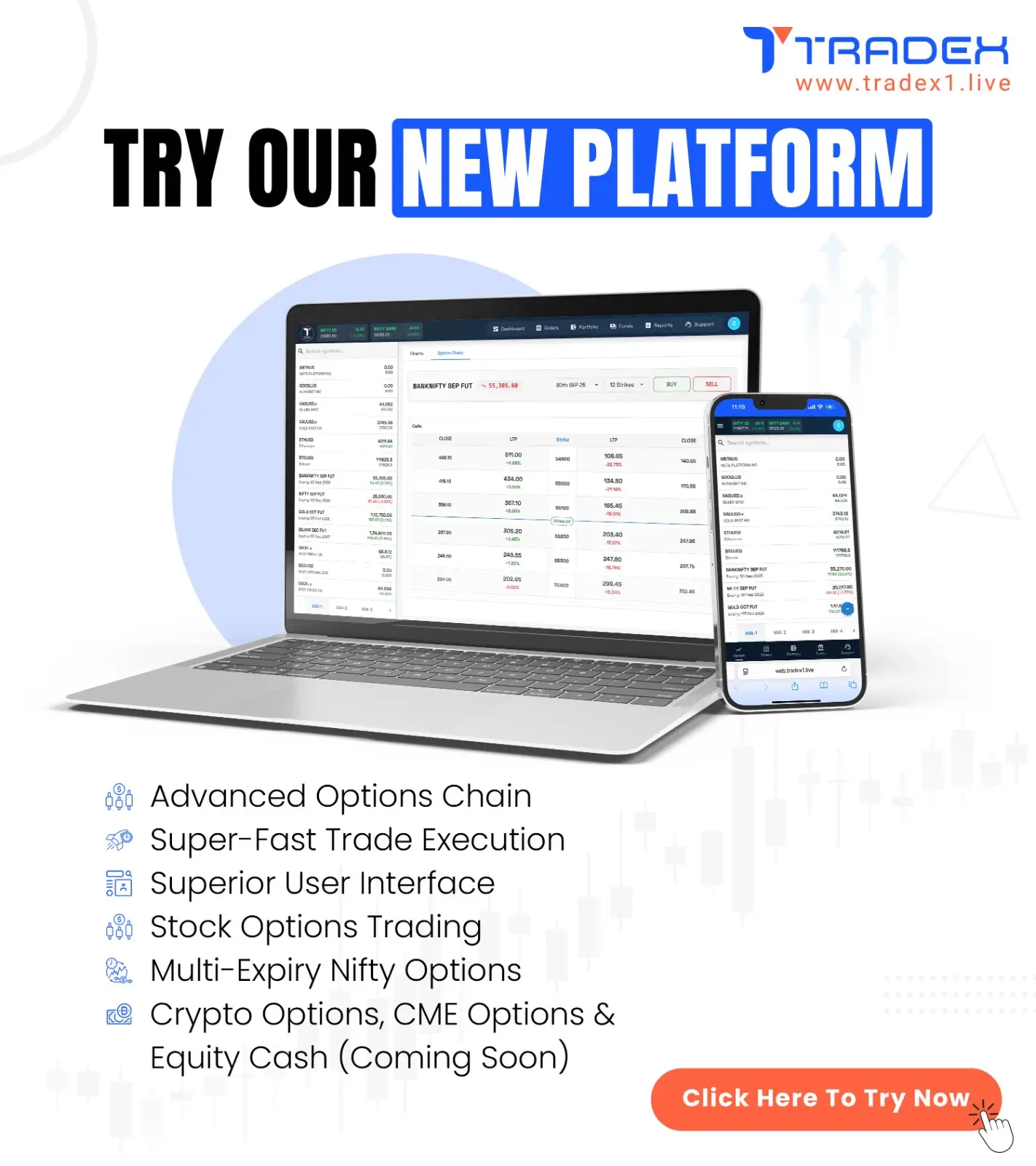
A Smarter Way to Trade — Introducing Tradex.live
If you’re searching for a contemporary, fully-featured trading platform for both newer and veteran traders, Tradex.live is worth considering. They offer:
- Zero Brokerage – So you can keep more of your profits.
- 500X Leverage – Which means you can say more with less. (leverage responsibly).
- 24/7 Instant Withdrawals. It’s your money, and you shouldn’t have to wait.
- No KYC Hold-Ups – Start trading without the formalities.
Whether you’re trading stocks, crypto, or forex, Tradex.live demonstrates speed, transparency, and flexibility for today’s trader. If you’re serious about intraday trading, choosing the right platform can be.
Download app: Android User | IOS User | Web Trader
Reach Tradex: https://tradex1.live/links/